
Boise · Meridian · Nampa · Eagle · Kuna · Caldwell · Star
Boise Flooring Installation Guide
How new floors go in across the Treasure Valley, from the tear-out to the last stair nosing. Read the guides, then send the details of your project through one short quote request.
Start here
Most flooring failures start below the floor
Flooring installation in Boise looks simple from the showroom. Pick a plank, pick a color, book a date. The trouble shows up months later: a hollow spot under the kitchen island, a gap that opens every January, grout that cracks along one line across the hall.
Almost every one of those problems traces back to something that happened before the first board went down. The subfloor wasn't flat. The slab was never tested for moisture. Wood sat in a cold garage instead of the room it was going into, then met a furnace running hard in the dry Idaho winter.
This site walks through those decisions in order, written for homes in Boise and the surrounding Treasure Valley cities. It's an independent guide, not a contractor. When you're ready, the install quote form collects the details an installer needs to give you a real number.
The order of work
Five stages of a new floor
Every install follows roughly the same sequence, whatever the material. Skipping one is where the callbacks come from.
-
01
Tear out.
Old carpet, pad, tack strip, vinyl or tile comes up first. Older sheet vinyl and its adhesive can contain asbestos, so test before scraping. Removal and disposal
-
02
Flatten.
High spots get ground, low spots get filled, loose subfloor gets screwed down. Flatness is checked with a long straightedge, not by eye. Subfloor prep
-
03
Test.
Concrete slabs and wood subfloors both get moisture readings, written down, compared against what the flooring maker allows. Moisture testing
-
04
Settle.
Wood and some laminates need time in the conditioned room before install. In a dry climate this step matters more, not less. Acclimation
-
05
Lay it.
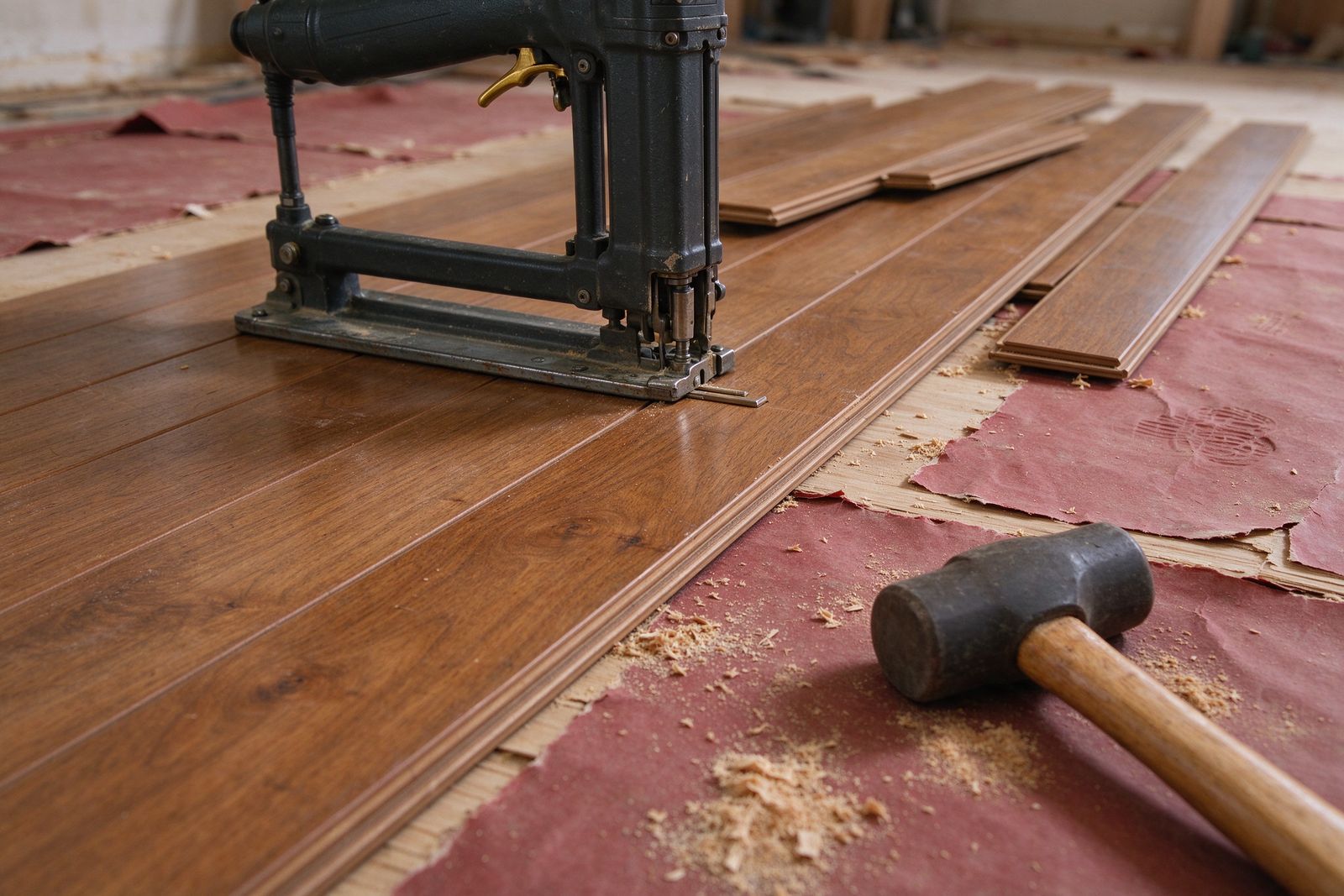
Floating, glue-down or nail-down, then transitions, stairs and trim. The method follows the product and the subfloor. Install methods
Sheet 02 / Conditions
Four conditions every floor needs
Whatever you choose, an installer is trying to hand you a floor that sits on something flat, dry, stable and free to move. Hover or tap a cell to see why each one matters.
Condition 01
Flat
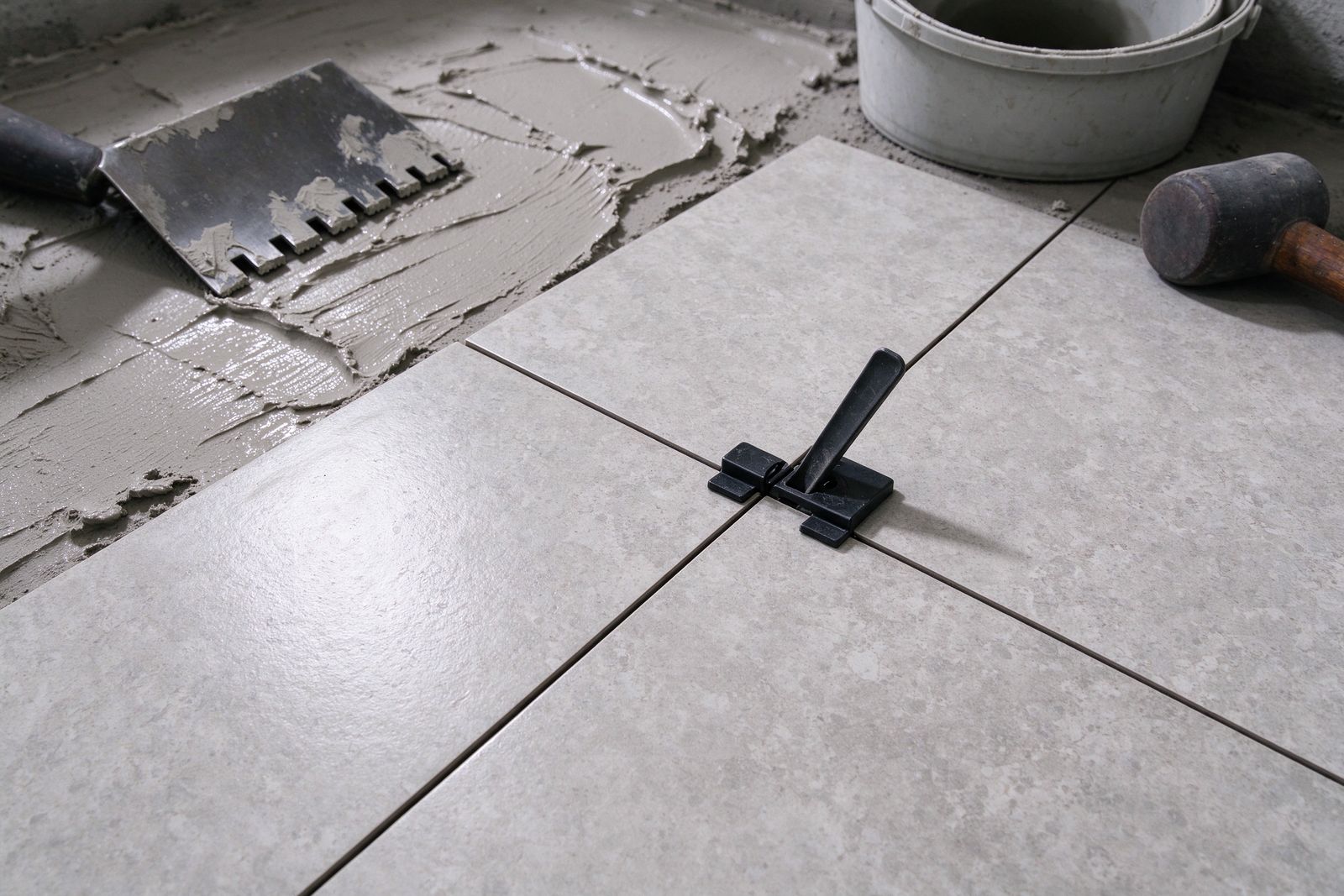
Click-lock planks and large tile are unforgiving. A dip under a floating floor flexes the joints every time someone walks over it, and the locking edges eventually give. Most manufacturers publish a flatness tolerance over a set distance, and that number, not the installer's eye, is the standard.
Condition 02
Dry
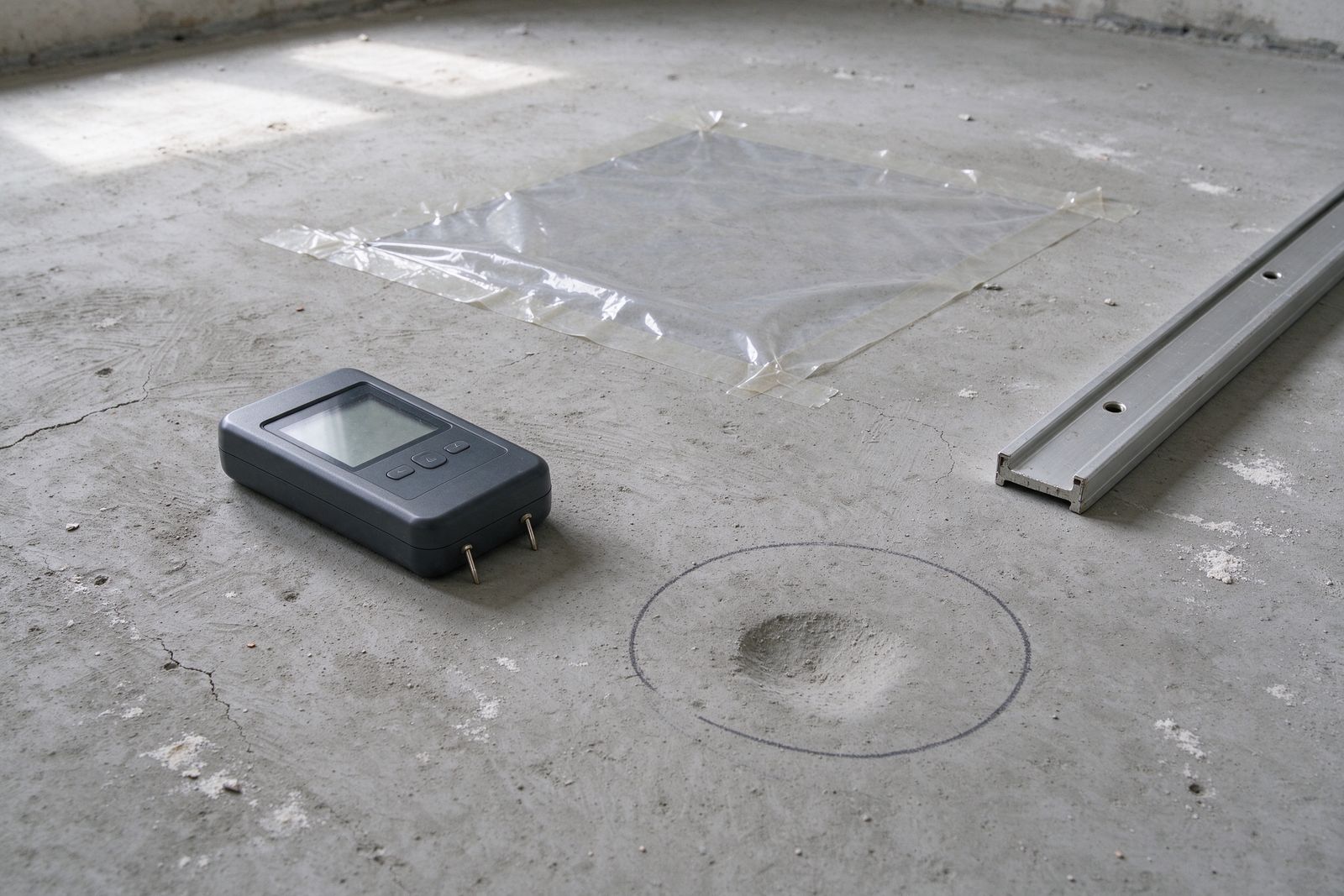
Moisture moving up through a slab can break down adhesive, cup wood and grow mold under vinyl. A slab can feel bone dry on top and still fail a proper test, which is why readings should be taken and recorded before anything is glued or floated over concrete.
Condition 03
Settled
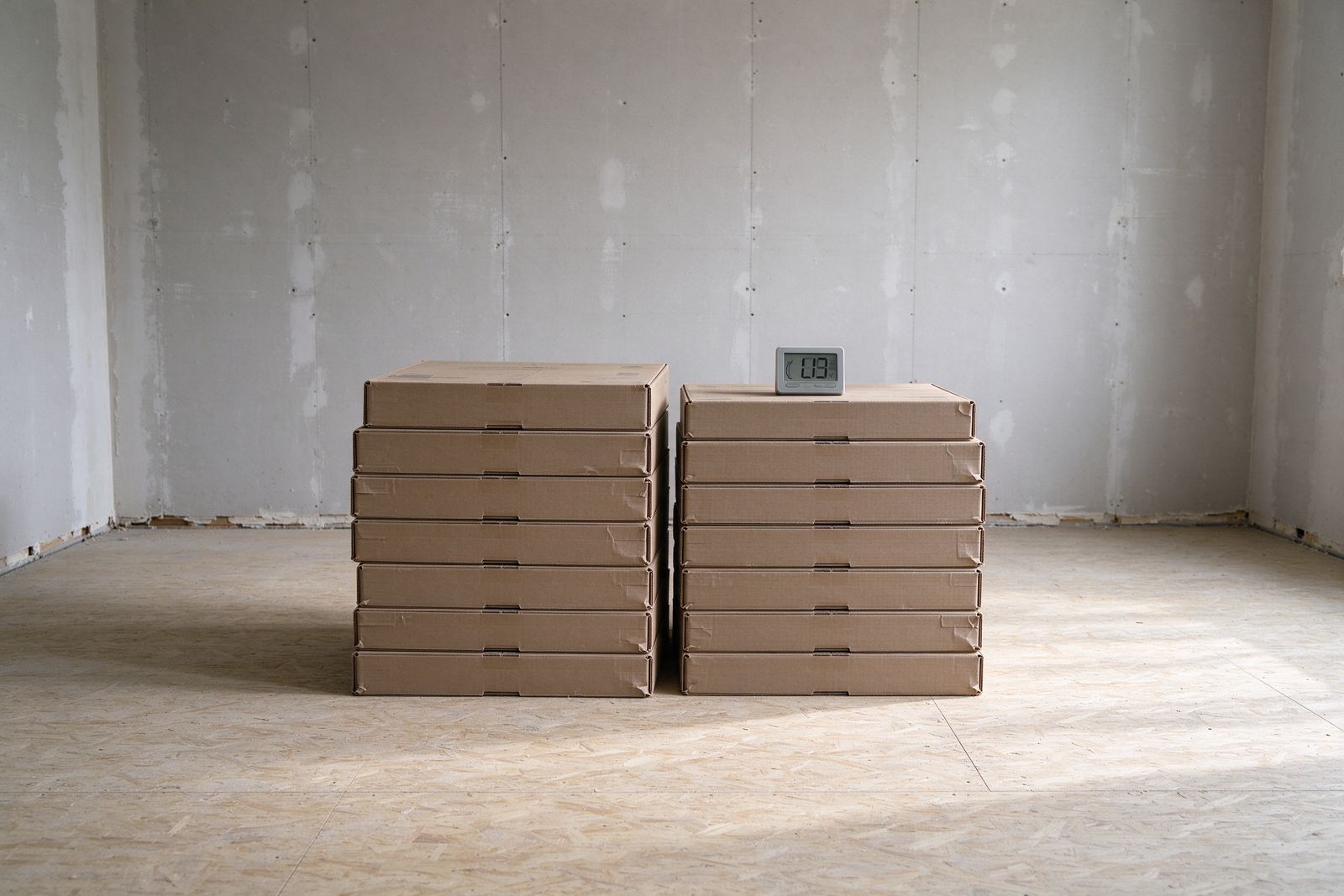
Wood takes on or gives up moisture until it matches the air around it. Install it before that happens and the floor keeps moving after it's down. Boise's dry air and long heating season make this the step people underestimate most.
Condition 04
Free to move
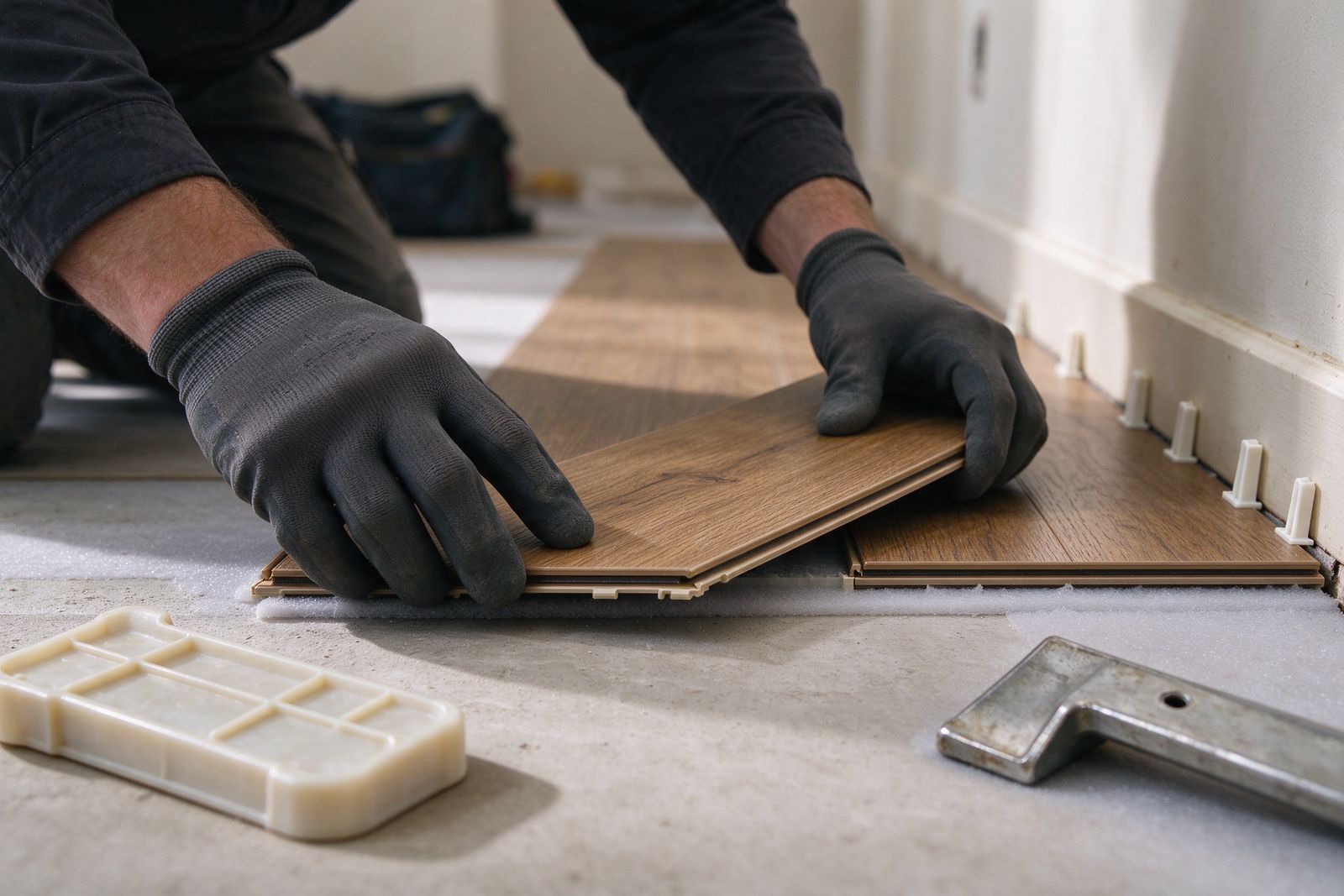
Floating floors expand and contract as a single sheet. They need a gap at every wall and fixed object, hidden by trim. Pin the floor under a heavy island or a tight door jamb and it buckles somewhere else instead.
Flat · Dry · Settled · Free to moveFlooring Install Boise / install conditions
03 / Materials
Six floors, six different installs
Each material brings its own prep rules, its own install method and its own weak spot. Pick one to see what changes.
-
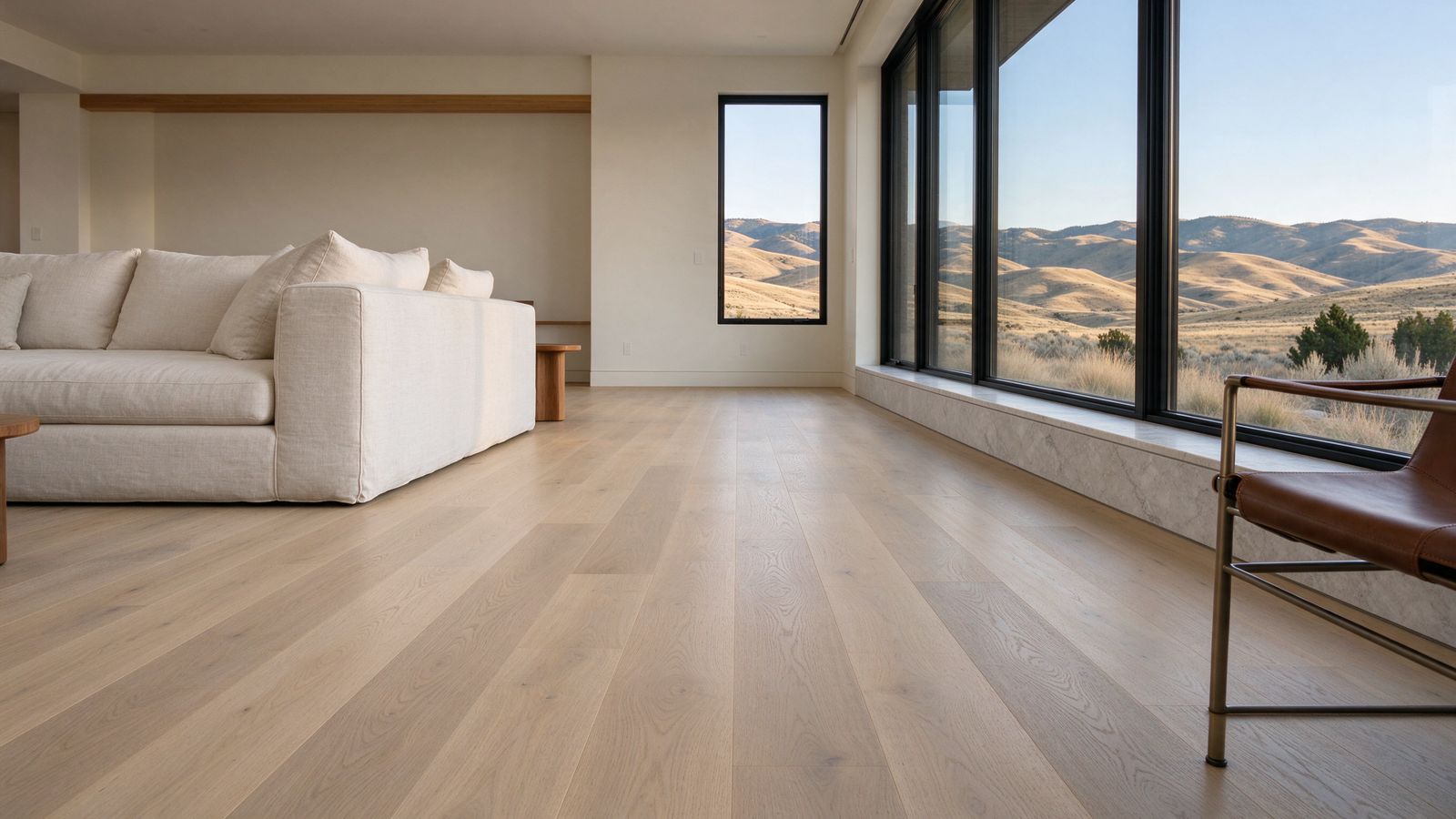
Usually a floating click-lock floor. It shrugs off spills and pets, but it telegraphs every bump in the subfloor and needs flatness more than almost anything else.
LVP in detail -
Nailed or stapled to a wood subfloor. It can be sanded and refinished many times, and it moves the most with humidity, so acclimation and moisture readings carry real weight.
Solid hardwood in detail -
A real wood wear layer over a cross-ply core. More stable than solid boards and the usual way to put wood over a concrete slab, glued or floated depending on the product.
Engineered wood in detail -
A printed image layer on a fiberboard core, floated over underlayment. Hard wearing and budget friendly, but the core does not like standing water or swollen edges.
Laminate in detail -
Set in thinset over a stiff, flat base. Large-format porcelain is popular and very sensitive to lippage, so the prep and the setting method matter as much as the tile.
Tile in detail -
Stretched over pad and held by tack strip. Seams, pad choice and a properly power-stretched install decide whether it ripples in a year.
Carpet in detail
Gallery · Install stages
Inside an install, step by step
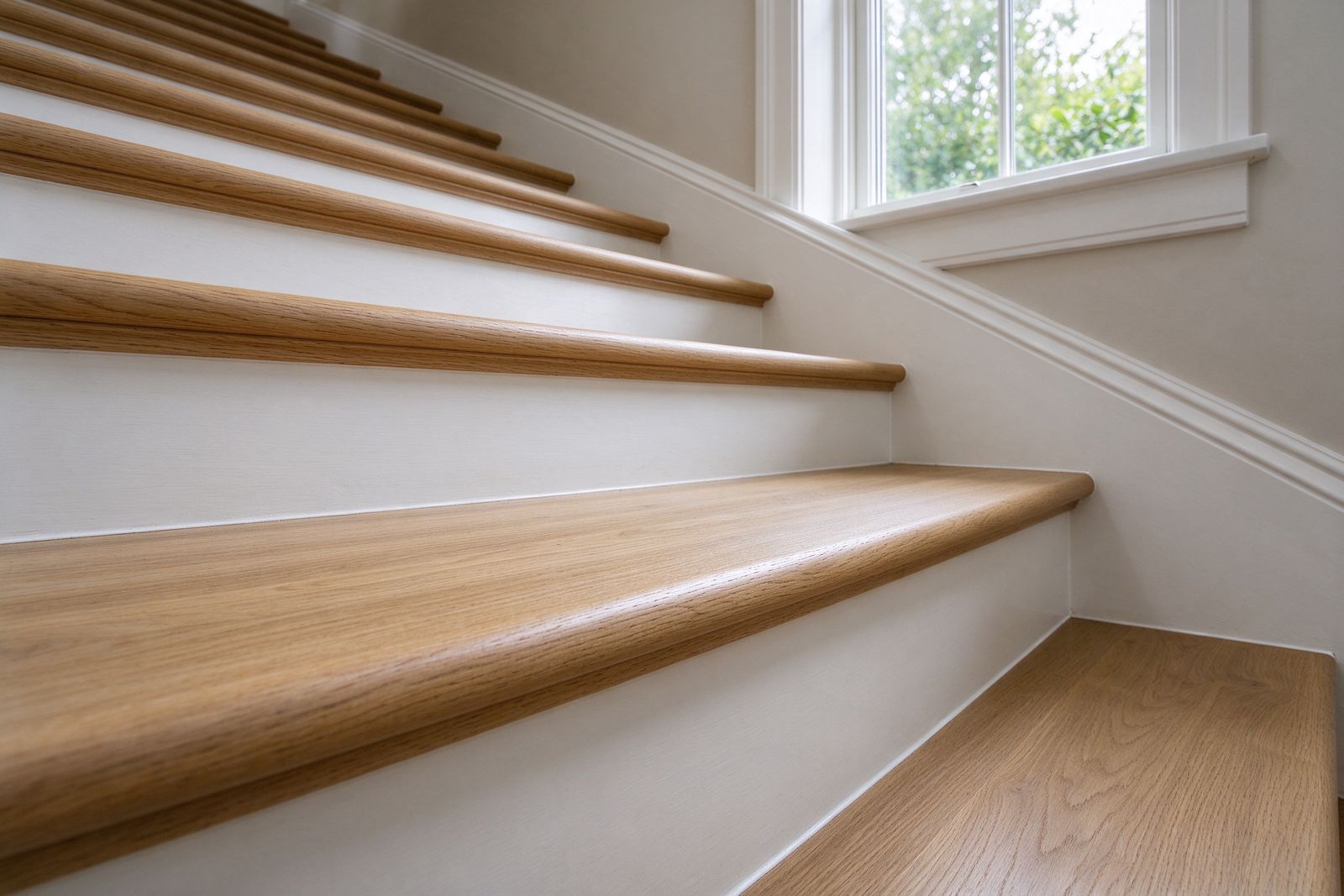
Eight stages of a typical install. Photos are illustrative and do not show a specific company's work.
Before you ask for a price
What to have ready for a flooring quote
Installers price labor, prep and materials separately. Walk in with these five answers and the conversation goes faster, and the quotes you collect will actually compare.
- 01
Rough square footage, room by room
Length times width for each room, plus closets and hallways. Note any room you aren't sure about. Installers add waste on top, more for diagonal or herringbone layouts.
- 02
What's on the floor right now
Carpet, sheet vinyl, tile, glued wood or several layers stacked up. Removal is its own line item, and tile or glued-down floors take far longer to pull than carpet.
- 03
What's underneath it
Concrete slab, plywood or OSB over joists, or a mix (a slab basement with a wood main floor is common). If you don't know, say so. A good installer checks anyway.
- 04
Stairs, doorways and height changes
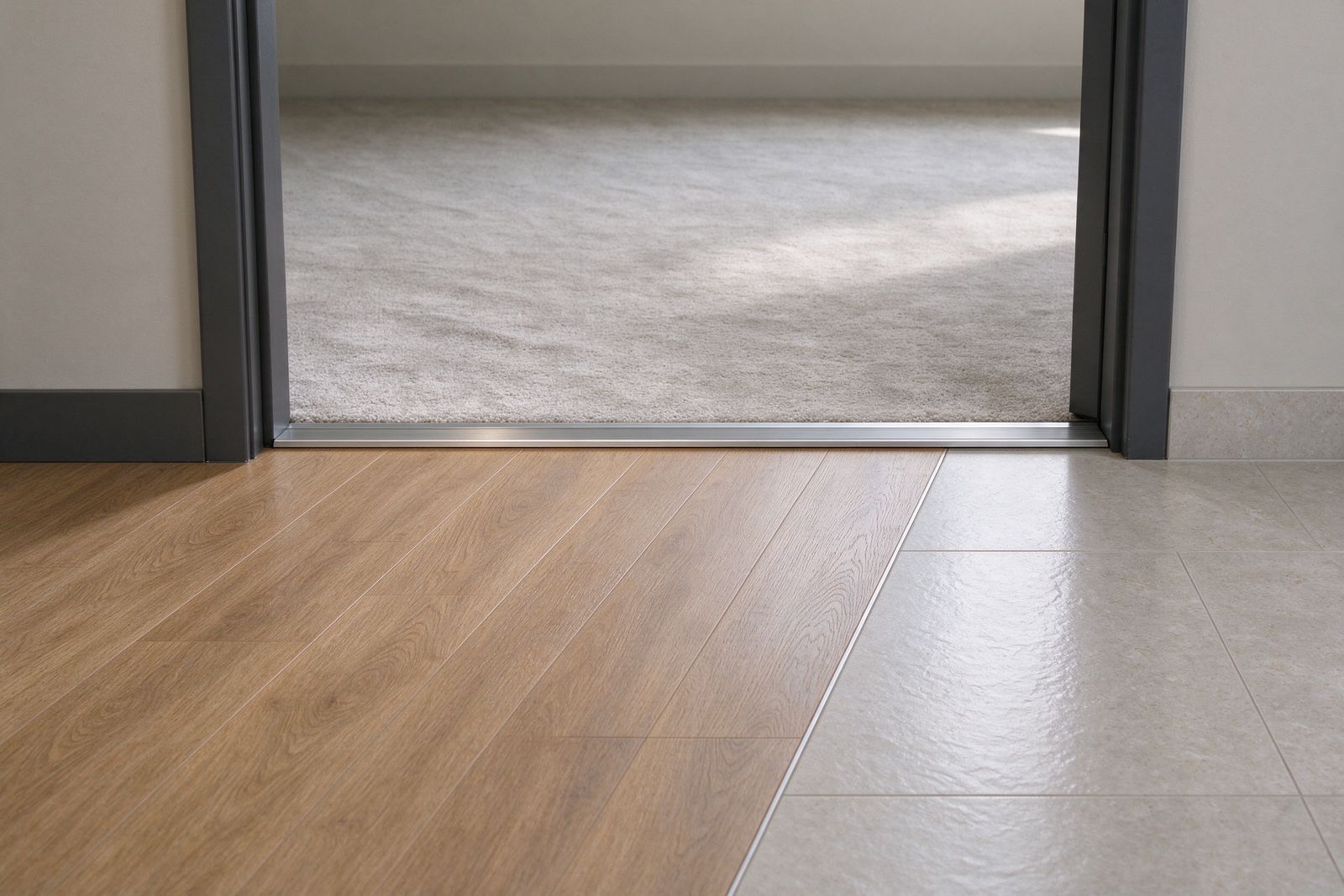
Count the stairs and note whether they're carpeted, capped or open on one side. List each doorway where the new floor meets a different one. These details move a quote more than people expect.
- 05
Timing, furniture and living arrangements
When you want it done, if you'll be living in the house, and who moves the furniture and appliances. Glue-down and tile installs can keep rooms off limits for a while after the work.
Local conditions
Why the Treasure Valley is hard on wood floors
Boise sits in a semi-arid valley. Summers are hot and dry, and winters bring weeks of furnace heat that pulls indoor humidity down further. Wood floors respond to that air. They shrink when it's dry and swell when it's damp, and the seasonal swing here is enough to open visible gaps in a solid oak floor.
That doesn't rule out hardwood. It means the install has to account for it: acclimating to the conditions the room will actually live at, choosing engineered or narrower boards where stability matters, and in some homes running a humidifier through the heating season. The acclimation guide covers the details.
The oak bar rises and falls as you scroll, the way indoor humidity swings through a Boise year. The shaded band marks a range many wood flooring makers ask homeowners to hold.
Winter furnace heat tends to push a house below that band. Summer, open windows and a new humidifier can push it the other way.
Illustration only. Your product's instructions give the actual range.Questions
Boise flooring installation questions
Do I need a permit to replace flooring in Boise?
Swapping one finished floor for another usually isn't treated like structural work, but rules differ by city and by scope. If the job involves replacing subfloor, cutting joists or changing anything structural, call the building department for the city you live in (Boise, Meridian, Nampa and the others each have their own) and ask before work starts.
How long does a typical flooring install take?
It depends on the material, square footage, how much has to come up first and how much prep the subfloor needs. Acclimation and adhesive or mortar cure times add days that have nothing to do with how fast the crew works. The timeline guide breaks down each stage.
Is LVP or hardwood better for a Boise home?
Neither wins everywhere. LVP handles water and pets and doesn't care much about humidity, but it can't be refinished. Hardwood can last generations and be sanded again, but it moves with the dry climate. The flooring comparison lays out the trade-offs side by side.
Does this site install floors?
No. Flooring Install Boise is an independent guide and quote-inquiry service, not a contractor. It does not perform installation work. Always confirm a contractor's current Idaho registration and insurance yourself before hiring.
What happens after I send a quote request?
Your project details go to the team behind this site by email, and the reply comes to the email address you enter. You aren't committing to anything by sending the form.
Quote request
Tell us about the floor you want
Rooms, square footage, what's coming up and what's going down. One form, about two minutes, and a reply by email.
Start the quote request